Request a quote
Get a Quote for Engine Filters
Email and phone are required. Leave anything you don't know blank.

Published
The Perkins engine serial number, which Perkins calls the engine number, sits on a metal data plate attached to the engine block, usually on the left-hand side. Its exact position varies by engine series, which is why Perkins publishes a lettered position reference rather than one fixed spot. Most people go looking for it for one reason: to get the right parts, including the right filter, for the specific engine build in front of them.
Before the number is any use, there is a wrong turn to avoid. The machine the engine is bolted into, whether a tractor, a backhoe, a compressor, or a generator set, carries its own plate. That machine plate is not the engine number, and it will not open the parts catalogue. This guide explains where the engine number is, what the rest of it means, and how to use it to find a filter you can actually confirm.
A tractor, backhoe, loader, compressor, or generator set carries a machine plate with the machine’s make, model, and serial or PIN. The engine number is a separate plate on the engine block itself. They answer two different questions.
The machine serial tells you what the machine is. The engine number tells you what the engine build is, and the build is what determines the filter. The same machine model can be fitted with different Perkins engines across production, and the same engine series can carry different filter arrangements across builds. The machine plate alone cannot confirm a filter.
A tractor owner once photographed the cab plate and sent it in as the “engine number.” It identified the tractor, not the engine. The engine number, on the left-hand side of the block behind a loader frame bracket, was what actually resolved the fuel element. Ten minutes of looking behind the right panel would have settled the enquiry in one exchange instead of three.
If you are staring at a plate on a cab, a frame rail, or a radiator shroud, you are looking at the machine. Walk to the engine.
There is no single “look here.” Perkins maps each engine series to a lettered position on a reference diagram. The table below turns that reference into plain text; the letter points to an illustrated location on Perkins’ own “identify your engine” page.
| Engine series | Position reference |
|---|---|
| 3.152 | M |
| 4.108 | A |
| 4.154 / 200 Series | B |
| 4.236 | C or L |
| 4.318 | F |
| 6.354 | D |
| 850 Series | D or R |
| Phaser / 1000 / 1100 Series | H or J |
| Perama / 100 / 400 Series | O |
| 1104D | S |
| 1106D (including PK) | R |
| 1204E | S |
| 1206E | R |
| 1300 Series | T |
| 1500 / 1600 Series | U |
| V8.640 | P |
Two things change how you read this table. First, the letters map to positions shown on Perkins’ own reference diagram, so confirm against that page or your engine manual if the plate is not where expected. Second, many older engines (4.108, 6.354, 4.236, 3.152, 4.203, and similar) carry the number stamped directly into the block near the injection pump or above the bell housing, rather than on a plate.
If the plate is not where the table says, work the fallback in this order:
The full number is structured, and each part means something. A typical format reads PJ12345U123456P.
The build list. The first part: two to four letters plus four or five numbers, for example PJ12345. It identifies the engine family and build specification. This is the minimum record Perkins’ own parts search requires, so it is the part most worth reading correctly.
The country of manufacture. A single letter that records where the engine was built: U for the UK, N for the USA, B for Brazil, S for India, and HC for China, among others. An R that appears right after the country code, for example URmarks a remanufactured engine.
The serial sequence. The unique build number that distinguishes one engine from the next.
The year of manufacture. A final letter. The letters I, O, Q, R, and Z are not used, and R was used for some engines built before mid-January 2008, before the code moved to S. The year code cycles, so the same letter repeats roughly every twenty years.
One distinction trips people up more than any other: a number that is raised out of the metal, cast as part of the block, is a casting number, not the engine number. The engine number is stamped: struck into the metal, or printed on the plate. On a 4.236 with no plate, a buyer once copied the raised number cast into the side of the block and ordered against it. That number identified the casting, not the engine; the stamped number beside the injection pump was the one that resolved the build.
This is the step most serial-number guides stop short of. The engine number matters because it opens the parts record for your build, and that record is what lists the correct filter.
The limit to state plainly: the engine number opens the right catalogue, but it does not by itself confirm the element. The same series can carry different filter arrangements across production builds and build origins, and a number in a catalogue can have been superseded. The removed filter’s complete number and its installed position are what turn a candidate into a confirmed item.
This is where the country-of-manufacture code earns its place. Two 1104D engines, one built in the UK and one built in China, can carry the same series name but different parts records. The country code in the engine number is part of the identity, and a China-built Perkins needs the China build’s record, not a UK-market listing.
For the full filter-identification process, read how to identify the correct engine filter. For the Perkins range, see filters for Perkins engines.
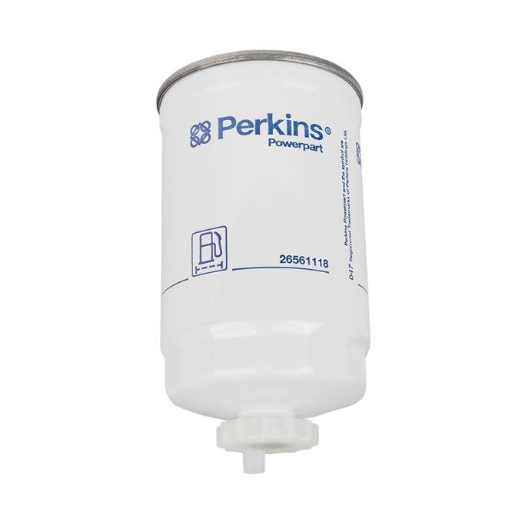
Before you contact a supplier, gather the record that lets the item be confirmed:
A partial photo of just the serial sequence once returned a quote for the wrong fuel element, because it missed the build list that distinguished one fuel arrangement from another on the same series. The full plate, photographed in one frame, would have resolved it in the first exchange.
Send the engine number, the number off the old filter, and the quantity. We confirm the engine build, the installed position, and the complete number on the offered item before quoting.
On the engine data plate, usually on the left-hand side of the block. The position varies by engine series. Perkins maps each series to a lettered reference position. If the plate is missing, check the block stamp and the build record.
Yes. Perkins calls it the engine number; it is the serial identifier on the data plate, made up of a build list, country code, serial sequence, and year code.
The first part of the engine number: two to four letters plus four or five numbers. It identifies the build configuration and is the minimum record Perkins’ own parts search requires.
Enter the engine number in Perkins’ parts lookup to open the build’s parts catalogue, then confirm the candidate filter against the number on the removed element.
Check the block stamp. On older engines, the number is often stamped near the injection pump or above the bell housing. Use the build list if any part of the number is legible, and photograph the plate area plus the removed filter’s number.
Most often a build variation, a country-of-manufacture difference, or a supersession. The engine number opens the catalogue; the removed filter’s complete number and the installed position are what confirm the correct element.
Need help confirming a filter? Send the engine build, complete part number and quantity for review.
Request a Filter Quote