Request a quote
Get a Quote for Engine Filters
Email and phone are required. Leave anything you don't know blank.

A Cummins coolant filter does one of two jobs. It either filters the coolant only, or it filters and releases a controlled dose of additive that protects the cylinder liners. The right element depends on the coolant type, the cooling system capacity, the thread form, and the engine build — not on a model name alone.
This page covers Cummins coolant filters for generator-set, plant, marine, and fleet duty, and how to confirm which element an engine takes. Engine-service filtration for Cummins- and Perkins-powered equipment. Cummins and Perkins are applications and original reference names only. Confirm the build, complete part number, and installed position before ordering.
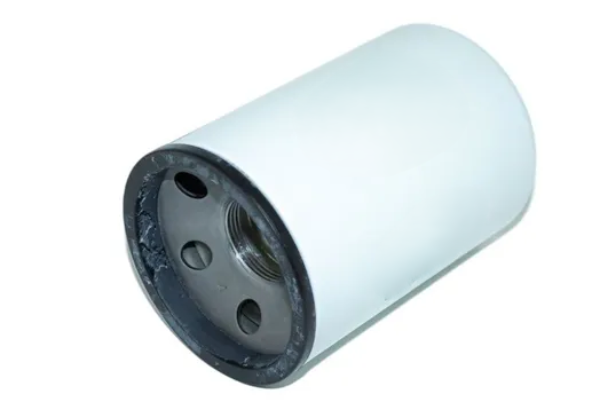
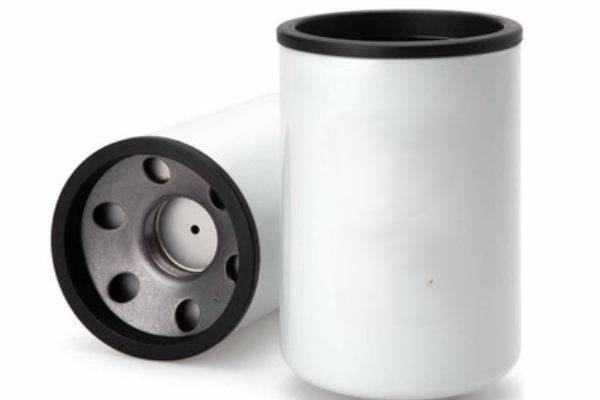
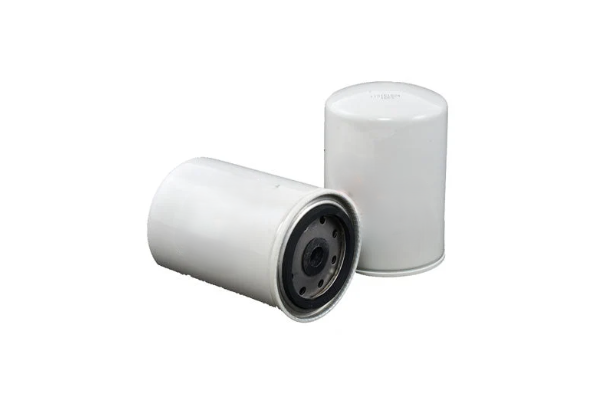
We supply engine-service coolant filtration for Cummins applications: blank coolant elements and chemical coolant elements. Two verified references we list are shown below.
A blank element filters only; a chemical element also releases a controlled additive dose. They are not interchangeable.
The blank coolant filter filters the coolant and releases nothing. It is used in fully formulated / ELC systems, or where additive is dosed separately. Confirm the coolant type first.
The chemical coolant filter filters and releases a controlled dose of additive — sold under names such as SCA, DCA4, BTE, and BTA — that protects wet-sleeve cylinder liners from cavitation erosion. Confirm coolant type, capacity, and dose.
A dimensional match confirms the thread, not the chemistry. Whether the element is blank or chemical is read from the coolant type and the build, not from the number alone.
| Filter type | What it does | When it is used | Confirm first |
|---|---|---|---|
| Blank (non-chemical) | Filters the coolant; releases nothing | Fully formulated / ELC systems, or additive dosed separately | The coolant type |
| Chemical (SCA) | Filters and releases a controlled additive dose | Conventional coolant needing supplemental protection | Coolant type, capacity, and dose |
| Precharge | Carries the initial heavy dose | After a refill | That the system is being recharged, not maintained |
| Maintenance | Carries the ongoing dose | At scheduled service | That the dose matches the running system |
Precharge and maintenance are separate jobs within the chemical type. The precharge element carries the initial heavy dose after a refill; the maintenance element carries the ongoing dose at service. The coolant filter selection guide from Luber-finer lays out the distinction. Ordering one for the other under- or over-doses the system.
A chemical filter’s additive dose is expressed in units, and the unit count is sized to the cooling system capacity. The same spin-on housing can carry a different additive load for a small system than for a large one, so a correct thread is not a correct dose.
Test the additive concentration at service; the result, not habit, determines the next element. Where the concentration is out of range, the dose is wrong even if the number looks right. The Baldwin coolant filter guide sets the unit sizing out by system capacity.
Extended-life and fully formulated coolants already carry their inhibitors. Adding a chemical filter on top can over-dose the system, so the coolant type is a selection input, not background detail.
The first question is which coolant the engine runs: conventional coolant that needs supplemental additive, or a fully formulated / extended-life coolant that does not. This page identifies the filter; it does not prescribe a coolant programme.
| If the coolant is… | Then the filter is typically… | Confirm first |
|---|---|---|
| Conventional, needing SCA | Chemical, sized to capacity | Coolant type, capacity, and dose |
| Fully formulated / extended-life | Blank, or no chemical filter | That the coolant is genuinely ELC |
| Freshly refilled | Precharge dose | The refill record, not a guess |
| Running, at service interval | Maintenance dose | The current additive test result |
If the coolant type is unknown, that is a record to establish before ordering. The filter lookup searches by part number or engine model once the records are in hand.
Six records turn a candidate reference into a confirmed match. Collect them before you request a quote.
The same model designation can carry different coolant filter arrangements across production years.
Conventional coolant needing supplemental additive, or fully formulated / extended-life coolant.
Used to size the dose where a chemical filter applies.
The physical fitment, separate from the chemistry.
Quote the complete number, including any suffix, and state whether it is blank or chemical.
Whether one element or a service set, and whether a genuine original is required.
Two numbering systems describe the same element: the engine maker’s and the filter maker’s. The cross-reference between them is where disagreement starts — and on coolant filters, the bare number does not carry the chemistry.
The Fleetguard numbering widely used here puts the position in the prefix. WF is the coolant filter prefix, while FF, FS, AF, and LF cover the other positions. Fleetguard is a filter brand, not ours; a Fleetguard number is a reference point, not a fitment statement. The prefix does not say whether the element is blank or chemical.
Quote the complete number, including any suffix — a truncated number is an incomplete record, and on coolant filters the suffix can hide the dose variant.
Fleetguard WF2126 and WF2075 are the two coolant filter product pages beneath this one: Fleetguard WF2126 and Fleetguard WF2075. A number missing from the current record may have been replaced.
A cross-reference is a candidate to review, not proof of fitment. A similar number, thread or external dimension does not by itself confirm media, seals, valves, additive dose or application suitability.
You send the build records, coolant type, and old numbers; we check each and state the item, maker, complete number, dose where applicable, quantity, and delivery terms. Unconfirmed lines are marked, not guessed. Multi-engine lists are quoted line by line; see bulk filter supply.
Send a multi-engine coolant filter list and receive each line quoted individually, with the maker, complete number, and dose stated where applicable.
Send a Multi-Engine List →It depends on the coolant type, the cooling system capacity, the thread form, and the engine build. Confirm whether the element should be blank or chemical, then send the build and the old number and we confirm the item.
A blank filter filters only; a chemical filter also releases a controlled additive dose that protects the liners. They are not interchangeable, and a thread match does not confirm the chemistry.
It depends on the coolant. Fully formulated / extended-life coolant may need none; conventional coolant may need a sized dose. Confirm the coolant type, not the model name.
The precharge carries the initial heavy dose after a refill; the maintenance carries the ongoing dose at service. Ordering one for the other under- or over-doses the system.
State the requirement before quoting; any alternative is labelled as one. Compare the additive dose and the media, not the thread alone.
A Cummins coolant filter is quoted against a coolant type, a dose, a thread, and a number, in that order. Record the coolant type, the capacity, and the old element’s number, then check the offer before it ships. Send the engine model, build number, coolant type, and the number printed on each element you are replacing. We will confirm the element, the offer, and the delivery terms line by line.
Request a Coolant Filter Quote →