Request a quote
Get a Quote for Engine Filters
Email and phone are required. Leave anything you don't know blank.

A fuel/water separator is the primary-stage element that strips water and bulk contamination from diesel fuel before it reaches the injection system. The correct separator is confirmed against the engine build, the installed position and the complete number on the element you are replacing — not by the model designation alone.
Request a Separator Quote →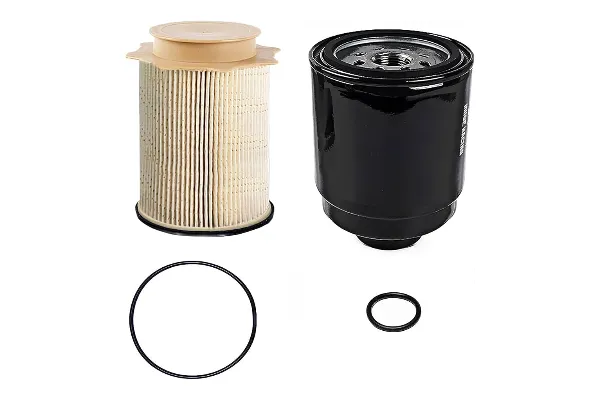
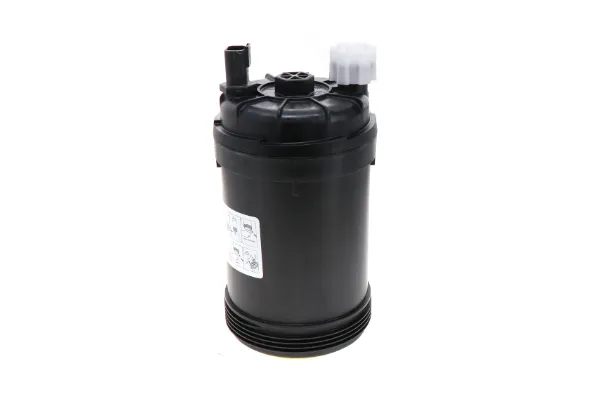
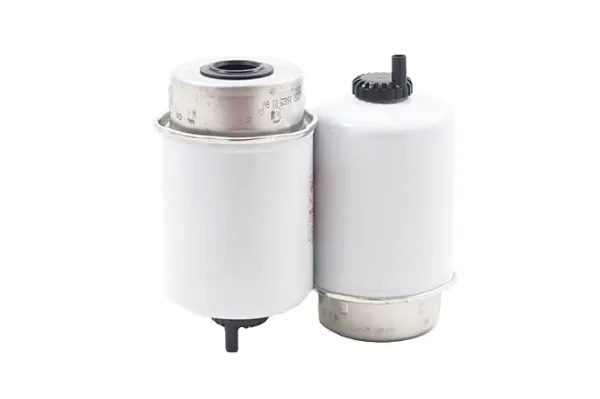
Two Fleetguard FS water-separating elements are listed for review. Confirm the engine build, installed position and complete number before ordering.
The separator removes water before it reaches close-tolerance injection components. Its position in the fuel path is part of why it works.
The separator removes free water and larger contaminants before fuel reaches the injection system. Water corrodes injection pump and injector internals and, under high pressure, can cause cavitation that erodes metal surfaces.
It sits early in the fuel path — between the tank and the engine, and on many builds ahead of the lift pump. Where a drain bowl is fitted, water collects below the fuel and can be checked and drained before it reaches the engine.
Water separates more reliably before the pump churns and emulsifies it into the fuel. Catch it early, drain it, and leave the fine filter downstream to do its own job.
Both stages can be called a fuel filter in the workshop. They do different jobs and are not interchangeable.
| Stage | Position | Main Job | Water Handling |
|---|---|---|---|
| Primary — fuel/water separator | Between tank and engine, ahead of the lift pump | Remove free water and bulk contamination | Drain bowl, where fitted |
| Final-stage — fuel filter | On or near the engine | Fine particle removal before the injection pump | May carry a water sensor |
Where a Fleetguard separator number begins with “FS,” it marks a water-separating element; “FF” marks a standard fuel filter. The prefix is a useful signal, not confirmation on its own.
A cross-reference gets you to a candidate separator. Before we quote, we check the complete number against the engine build record and the position on the engine.
Provide the full serial or build number. The same model designation can carry different filter arrangements across production years.
Is this the primary separator ahead of the lift pump, or the final-stage element on the engine? The two are not interchangeable.
Read it off the filter body, not from memory or a screenshot of a listing. Include every prefix and suffix.
State whether this is a single machine or a multi-engine parts list, with the quantity required for each item.
Water enters diesel fuel through condensation, poor handling at storage, and microbial growth at the fuel-water boundary. The symptoms show up in how the engine runs.
A warning light, where the system carries a water-in-fuel sensor.
Extended cranking before the engine catches.
An uneven idle, especially when the engine is cold.
Reduced power under load and increased exhaust smoke.
Fuel-system damage that builds up over time and is expensive to reverse.
No real-time inventory feed and no general service interval are published here. Drain and replacement intervals are set by the engine maker for your specific build.
Draining and replacing are two different tasks, and they happen on different schedules.
Draining removes collected water. Where a bowl is fitted, it can be done without removing the element.
Routine taskDrain on the schedule set by the engine maker, and whenever water is visible.
Replace when the media is loaded, the seal is disturbed, or the build’s service interval calls for it.
Service taskConfirm the replacement interval for your engine build before planning the service.
Draining removes water; it does not renew the element. A drained separator is not a replaced one.
Keep them separateDrain for water; replace for media life and seal condition.
Where the build calls for it, change primary and final-stage elements together so the fuel system is serviced as a whole.
Confirm the scopeKeep the installed position and complete number for each element.
Not exactly. A fuel/water separator is a type of fuel filter whose main job is removing water and bulk contamination at the primary stage. The final-stage fuel filter that follows it removes fine particles. Both can be called fuel filters, but they are not interchangeable.
Drain the bowl on the schedule set by the engine maker for your build, and whenever water is visible in the bowl. A generic interval does not apply across engine builds, so confirm the figure for your machine.
Collect the engine maker, model, full serial or build number, the installed position, and the complete number on the element you are removing. Send all of them and we confirm the offered item against the build record before quoting.
A cross-reference is a candidate to review, not proof of fitment. Where a reference points to a different number, it usually means a supersession or build variation. We confirm the complete number and installed position before any offer is made.
The primary separator removes water and larger contaminants ahead of the lift pump. The final-stage filter removes fine particles before the injection pump. They do different jobs and are not interchangeable.
Send the engine build, the number off the old separator and the quantity you need. We confirm the offered item, its maker, its complete number and the delivery terms before anything ships.
Request a Filter Quote →