Request a quote
Get a Quote for Engine Filters
Email and phone are required. Leave anything you don't know blank.

Published
A diesel fuel system usually filters in two stages: the primary filter removes water and bulk contamination on the suction side, and the secondary filter removes fine particles just before the injectors. The secondary stage is also called the final stage, and the two elements are not interchangeable. The words “primary” and “secondary” are used loosely across documents and workshops, so the reliable way to tell them apart is by installed position, not by the name on the box.
This guide explains what the two stages do, why they are not interchangeable, and how to tell which one you are holding before you order. You will finish with a check you can run on the machine itself, no documentation required.
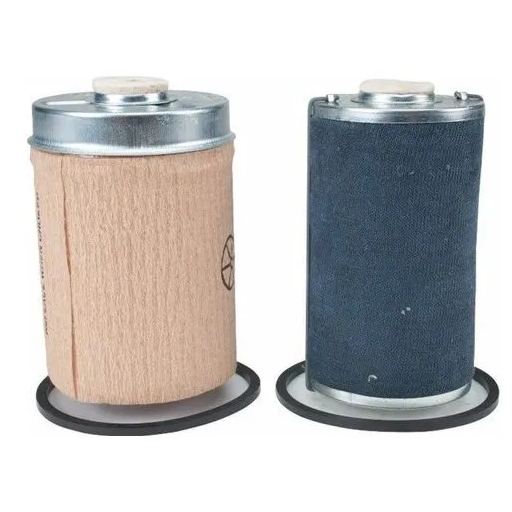
Fuel flows one way: from the tank, through the primary stage, to the lift or transfer pump, through the secondary stage, and into the high-pressure pump and injectors. Each stage does one job, and doing the jobs in order is the whole point.
The primary filter sits on the suction side, before the lift pump. Its job is to take the load first: it catches the larger particles and, just as important, strips out water before the fuel reaches the pump and the finer element.
Water is the enemy that the primary stage exists to handle. Water reaching the high-pressure side causes pump and injector damage, and it does not need to be a lot of water to do it. That is why the primary stage is often the element with a drain valve, a clear bowl, or a water-in-fuel sensor. On many installations, the primary stage is the one you drain during routine service.
Because it works on the suction side, the primary element must flow freely. A primary filter that is too restrictive starves the lift pump, which is a problem in itself and a separate failure from the one a fine filter is meant to prevent.
The secondary filter sits on the pressure side, after the pump and before the injection equipment. It is the last line of defence. Its job is fine particulate removal, and it works at a level the primary stage does not reach.
“Secondary” is the common word; “final stage” is the precise one. They mean the same element. This is the filter whose failure is most expensive, because everything downstream of it is precision equipment: the high-pressure pump and the injectors. A substitution you have not verified matters most here.
One sentence explains why the two stages are arranged this way: progressive filtration only works if the downstream element is the finer of the two. Two elements of the same rating in series add nothing, because whatever passes the first will pass the second. The coarse element takes the load; the fine element protects the injectors.
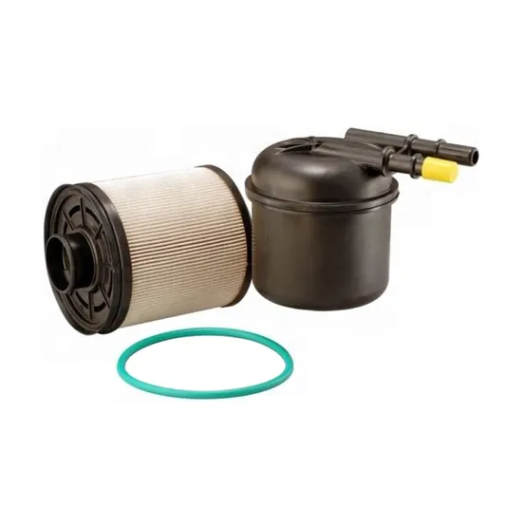
The two stages are easy to confuse and hard to substitute. This table is the quick version of the difference.
| Attribute | Primary (separator stage) | Secondary (final stage) |
|---|---|---|
| Position in the fuel path | Tank side, before the lift/transfer pump | Pressure side, after the pump, before the injectors |
| Main job | Remove water and bulk contamination | Remove fine particles |
| Media rating | Coarser | Finer |
| Typical hardware | Drain valve, clear bowl, or water-in-fuel sensor | Plain element, often engine-mounted |
| Common prefix | FS (fuel/water separator) | FF (fuel filter) |
| What to confirm | The builder or packager may supply this stage | Listed on the engine parts record |
The coarser-finer split is well documented. Donaldson’s engine filtration material describes the primary element operating at a coarser rating than the final-stage element, and a 2009 SAE paper on common-rail filtration found that pairing a suction-side primary stage with a pressure-side final stage measurably extends common-rail fuel system life.
Scope note: Engine-service filtration for Cummins- and Perkins-powered equipment. Cummins and Perkins are applications and original reference names only. Confirm the build, complete part number, and installed position before ordering.
This is where most wrong orders start. The words “primary” and “secondary” do not mean the same thing everywhere. One document calls the first filter in the fuel path the primary.
Another calls the on-engine filter the primary. A third uses “primary” to mean the coarse element regardless of position. None of them is lying; they are using the same word for different things.
The filter maker’s convention gives a useful clue. In the Fleetguard and Cummins numbering system, the prefix describes the job:
A prefix is a clue to confirm, not a verdict. The prefix describes what the maker built the element to do, and it usually lines up with the stage, but the only way to be sure on your machine is to check where the element sits and what the parts record says for that build.
The check that survives every naming disagreement is the fuel path. Start at the tank and follow the line toward the engine. The first filter head you meet is the primary. The element that feeds the injection system is the final stage.
Size does not settle it either. A technician tracing the lines on a truck found a smaller 20-micron separator upstream and a larger 10-micron element downstream, the reverse of what he expected. The smaller element was the primary. Both the name and the size had misled him; the fuel path had not.
So the rule is simple: the position decides, and the name is only a hint. When the name and the position disagree, trust the position and raise the disagreement with your supplier before ordering.
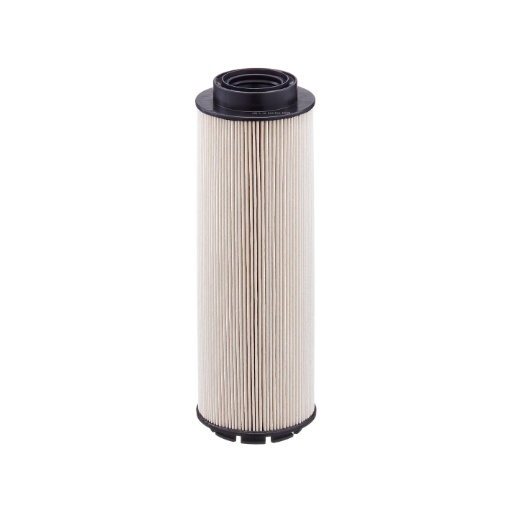
Run this with the machine in front of you. It needs no parts catalogue.
Maya, a maintenance planner for a construction fleet, used exactly this sequence on an excavator whose service manual had gone missing. She followed the line, found the drain on the first head, and read the FS number off the removed element. That single pass told her which stage she was replacing and what to put on the parts list. The whole check took less time than searching for the manual.
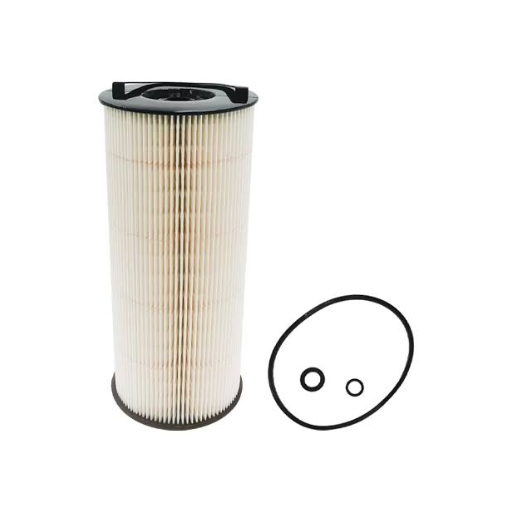
The arrangement is build-specific, not model-specific. The same model designation can carry a single element on one production run and two elements on the next, so the engine model alone never settles the question.
Common-rail builds, including later Cummins B-series and QSB/QSL engines and Perkins common-rail installations, normally run two stages: an upstream separator and a finer final-stage element at the engine. Older mechanical builds may run a single on-engine element with no separate separator. The emissions configuration and the application both shift which arrangement a given build carries.
There is a third case worth knowing, and it causes more confusion than the first two combined. On generator sets, some chassis installations, and some marine builds, the upstream stage is supplied by the equipment builder, not the engine maker. The engine parts record can be complete and still not list the primary element, because the builder, not the engine maker, chose it.
That is the situation Priya hit while quoting filters for a standby generator set. The engine record listed one fuel element. The set itself carried two. The upstream separator came from the genset packager, so it appeared on the packager’s list, not the engine record. Until she found the packager’s number, every “primary filter” quote she received was for the wrong stage.
When you have sorted out which stage you are holding, collect the records that turn a guess into a confirmed item:
Where two records disagree, send both. The disagreement is useful information, not an error. It usually means a supersession, a build variation, or an element that was fitted from the wrong specification the last time around.
What is the difference between a primary and secondary fuel filter?
The primary filter is upstream and coarser; it removes water and bulk contamination before the lift pump. The secondary, or final-stage, filter is downstream and finer; it protects the injectors. Confirm which is which by installed position, not by the name.
How many fuel filters does a diesel engine have?
One or two stages depending on the fuel system. Common-rail builds usually run an upstream separator plus a final-stage element; older mechanical builds may run a single on-engine element.
Is a fuel water separator the same as a fuel filter?
No. A separator is a distinct primary-stage element with a water-removal job. Some builds combine water separation and fine filtration in one cartridge, which is why the housing has to be checked, not just the number.
Which is the primary, FS or FF?
Usually FS, the fuel/water separator, is the primary, and FF, the fuel filter, is the final stage. The convention must be confirmed for the specific number and by the installed position, because documents use the words differently.
Why does my engine have a filter the parts record does not list?
The upstream stage may be supplied by the chassis builder or the generator packager, so the engine record can look complete and still miss a number. Check the packager’s list or the number on the old element.
Can I use an aftermarket fuel filter instead of a genuine original?
That depends on the requirement you are working to. If a genuine original is mandatory, declare it before quoting. What matters in every case is that the maker, complete number, and specification match what the engine requires, and that all of it is stated in writing on the quotation.
Need help confirming a filter? Send the engine build, complete part number and quantity for review.
Request a Filter Quote