Request a quote
Get a Quote for Engine Filters
Email and phone are required. Leave anything you don't know blank.

Published
A coolant filter does two jobs at once. It filters solid debris out of the coolant, and on most heavy-duty diesels, it also releases a measured dose of coolant additive into the system. The first job protects the cooling system from abrasive wear. The second protects the cylinder liners from cavitation pitting, which is the failure this element exists to prevent.
This guide explains what a coolant filter does, why its additive load is the part that matters, and what to confirm before you order one. It is written for engine-service filtration on generator sets, plant, marine, and fleet duty, where Cummins and Perkins are application and reference names only.
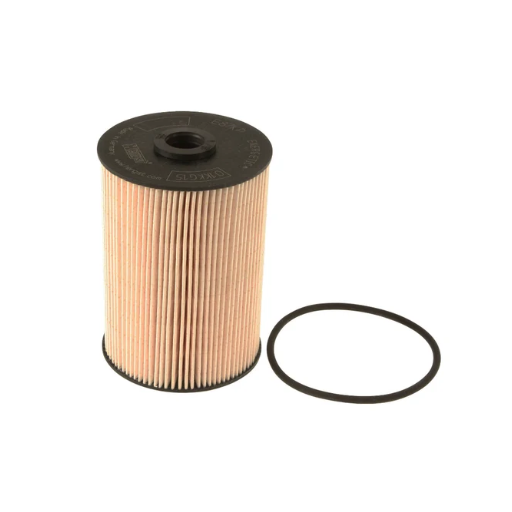
Most people see a coolant filter and assume it is a water filter. That is only half of it. The element is a coolant-conditioning element, and conditioning means both cleaning the fluid and maintaining its chemistry.
The filter media traps the solid material that circulates in the cooling system. Casting sand left inside the block, rust flakes from ferrous surfaces, scale that has broken loose, and the fine debris that wears water-pump seals and clogs radiator cores.
Without this removal, those particles keep circulating. They score the water-pump seal, restrict flow through the radiator, and eventually cause a hot spot the engine cannot shed.
The chemical half is the part a plain “water filter” does not do. Many coolant filters carry a charge of supplemental coolant additives, shortened to SCA, inside the element. As coolant passes the element, the additive dissolves slowly into the stream.
The additive package does three things. It controls corrosion on iron, aluminium, and solder surfaces. It buffers the coolant’s pH. And, most importantly on a diesel, it forms a protective film on the wet cylinder liners.
The film is what stops cavitation. That is the point the next section covers, because it is the reason a diesel coolant filter is not a cosmetic part.
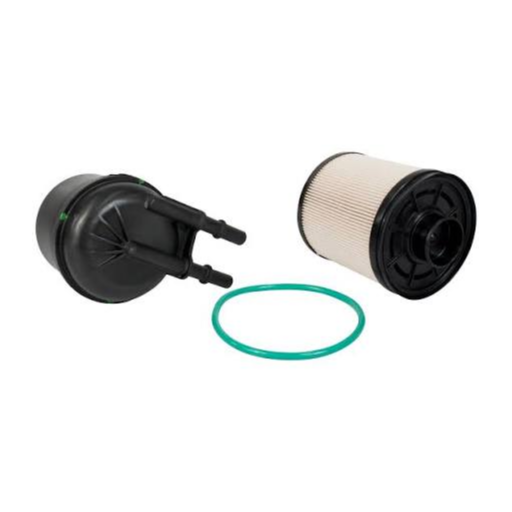
Cavitation erosion is a diesel-specific failure that most buyers never see until it is too late.
Here is the mechanism. A wet cylinder liner sits directly in the coolant. During each combustion stroke, the liner vibrates. That vibration sends pressure waves through the coolant, which form tiny vapour bubbles against the liner wall. The bubbles collapse with enough force to pit the metal, and every collapse knocks a little more of the liner away.
The SCA film interrupts that cycle. The additive, working through nitrite and molybdate chemistry, lays down an oxide layer on the liner surface. The collapsing bubbles strike the film instead of the bare metal.
Without enough additive, the pitting continues. Given time, it perforates the liner, and coolant passes through the hole into the crankcase. By the time the oil level rises or the oil turns milky, the liner is gone.
This is why the additive load on a coolant filter is a fitment decision, not a preference. A filter that physically fits but carries the wrong load for the coolant leaves the liner unprotected. The Baldwin technical note on the anatomy of a coolant filter walks through the SCA charge and the flow-control orifice that meters it. The Luber-finer coolant study guide sets out why additive levels are maintained, and cites improper coolant flow as the cause of nearly half of early engine failures in heavy-duty diesels.
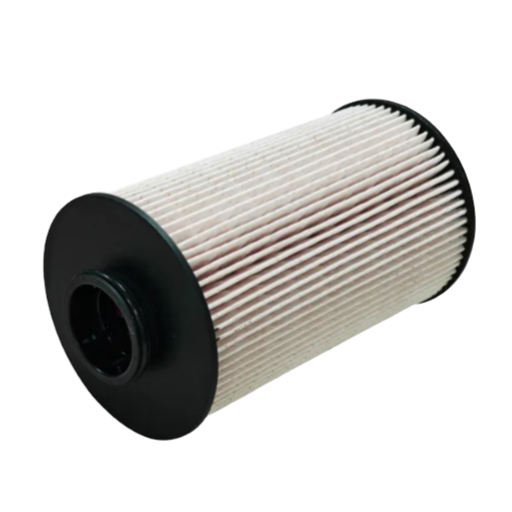
Not every coolant filter carries the same chemical load. The element you remove tells you which family it belongs to, and the family tells you what the coolant needs.
| Filter type | What it carries | What it is for |
|---|---|---|
| Standard-service (SS) | A fast-release additive charge | Conventional coolant, replenished on a shorter interval |
| Extended-service (ES) | A slow, controlled-release charge | Longer intervals; avoids dumping too much additive at once |
| Blank / non-chemical | Filtration only, no additive | Coolant already fully charged, or extended-life coolant (ELC) |
The release rate matters as much as the amount. A fast-release charge dissolves quickly. A controlled-release charge meters itself over a longer service period. Dumping the whole charge at once, called slug dosing, can cause additive precipitation and water-pump seal leakage. That is why the flow-control orifice inside the element exists.
Which family your engine runs is not a choice you make at the counter. It follows from the coolant in the system and the engine build. A blank filter on conventional coolant is as wrong as an additive filter on a fully charged extended-life coolant. Both fit. Only one matches.
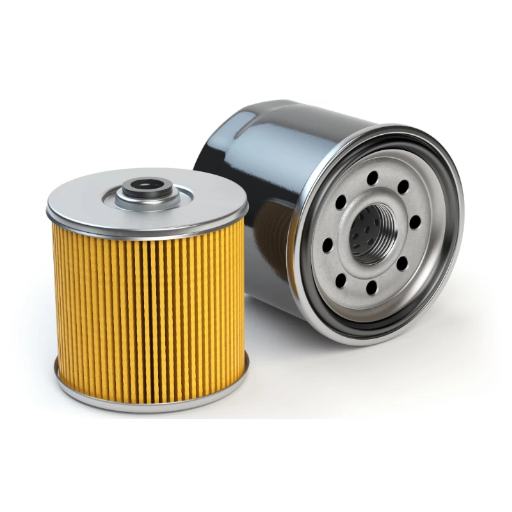
The right answer comes from three records, in this order.
The coolant chemistry is the first filter. Conventional coolant relies on the filter to replenish additives. Extended-life coolant arrives pre-charged and is usually paired with a blank element or a specific extended-service charge.
If you do not know which coolant is in the machine, you cannot know which load to fit. Check the service record, or test the coolant before you swap loads.
The removed element is the most reliable record. Read the complete number, including any suffix, and note the installed position.
Do not stop at the brand name or the thread. A “Cummins coolant filter” is a part reference, not a machine type, and the same role carries several numbers. The complete number is what distinguishes a standard-service element from an extended-service one.
If the coolant’s additive level is already low, the fix is to restore it, not to fit a blank filter and wait. Additive level is checked with coolant test strips that read nitrite and molybdate. If the reading is below the manufacturer’s target range, the correct response is a chemical filter or a liquid additive, depending on the coolant.
The exact target range and test method come from the coolant or engine maker. Confirm the figure against the manufacturer’s specification for your build rather than taking a number from a listing.
Scope note: Engine-service filtration for Cummins- and Perkins-powered equipment. Cummins and Perkins are applications and original reference names only. Confirm the engine build, complete part number, and installed position before ordering.
If you already have the number and want it checked against a build, the filter lookup explains what to send. Questions about the coolant-element range route to the Cummins coolant filters category, and Perkins-duty questions route to Perkins coolant filters.
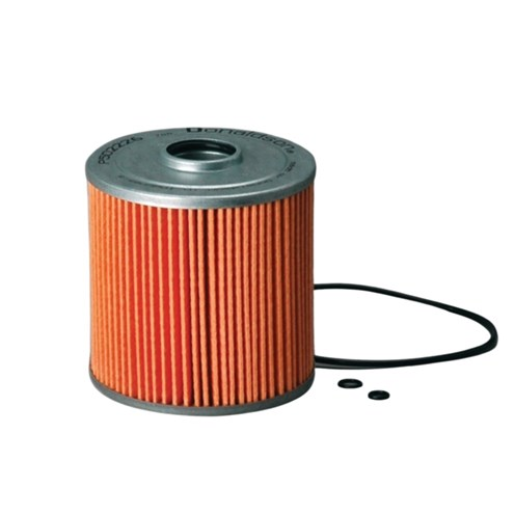
This is the naming trap that causes most coolant-filter misfits.
“Cummins coolant filter” names a coolant-conditioning element carrying a Cummins or Fleetguard reference. It does not mean “a filter for any Cummins engine”. The same applies to Perkins, Fleetguard, Donaldson, and Baldwin. The brand names the part, not the machine.
A cross-reference gets you to a candidate. It does not confirm the load, the coolant match, or the build. Fleetguard is an Atmus Filtration brand, and its numbers appear on Cummins-referenced elements, but a reference name is not proof of fitment.
What does a coolant filter do on a diesel engine?
It filters solid debris out of the coolant and, on most heavy-duty diesels, releases a measured dose of supplemental coolant additive into the system. The additive prevents corrosion, scale, and the liner cavitation that can let coolant into the crankcase.
Is a coolant filter the same as a water filter?
Not on a diesel. A coolant filter does the mechanical filtration a water filter does, but it also carries an additive charge that maintains the coolant chemistry. A blank, non-chemical filter is the closest thing to a water filter, and even that is built for a specific coolant strategy.
What is the difference between SS, ES, and blank coolant filters?
Standard-service filters carry a fast-release additive charge. Extended-service filters release their charge slowly over a longer interval. Blank filters carry no additive and suit coolant that is already fully charged, such as extended-life coolant.
How do I know if I need an additive filter or a blank filter?
Check the coolant type and its additive level. Conventional coolant normally pairs with a chemical filter. Extended-life coolant normally pairs with a blank or a specific extended-service element. Confirm the number on the removed filter.
How do I check my coolant’s additive level?
Use coolant test strips that read nitrite and molybdate. Compare the reading against the manufacturer’s target range, then match the filter load to what the coolant actually needs.
Do all diesel engines have a coolant filter?
No. Many smaller or lighter-duty engines are not fitted with one from the factory, and some installations run a blank element or none at all. Confirm what your build actually carries before ordering.
Need help confirming a filter? Send the engine build, complete part number and quantity for review.
Request a Filter Quote