Request a quote
Get a Quote for Engine Filters
Email and phone are required. Leave anything you don't know blank.

Published
A crankcase filter separates oil mist from the blow-by gas that leaks past the piston rings, so the gas that leaves the engine is clean. In a closed system, that clean gas goes back into the intake and burns. In an open system, it vents to the atmosphere. Which one your engine uses is a build decision, and it decides which element you order.
This guide explains what a crankcase filter does, why open and closed ventilation are two different jobs, and what to confirm before you order one. It is written for engine-service filtration on generator sets, plant, marine, and fleet duty, where Cummins and Perkins are application and reference names only.

During the power stroke, a small share of the combustion gas does not stay in the cylinder. It slips past the piston rings and into the crankcase. That gas is blow-by, and it is not clean.
Blow-by carries soot, unburned fuel, water vapour, acids, and a fine oil mist picked up from the sump. Left unvented, it pressurises the crankcase. Rising pressure works against the seals and gaskets, and the first sign is usually an oil leak or a pushed-out seal.
So the crankcase has to breathe. The gas has to be let out, and on most modern diesels it passes through a filtration element on the way out. That element is the crankcase filter, also called a crankcase ventilation filter or, in Perkins language, a crankcase breather filter. The naming difference is covered further down; the job is the same.
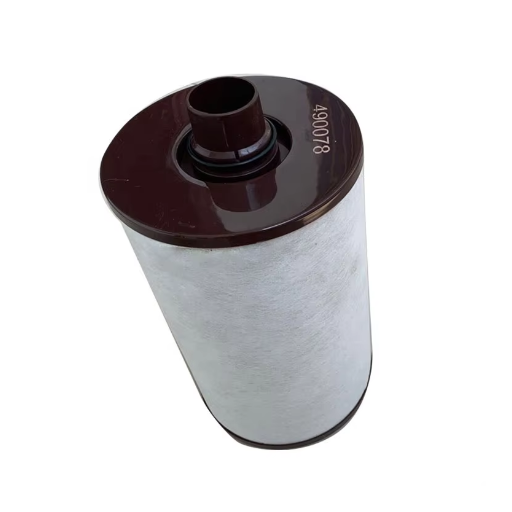
A crankcase filter is a coalescing element in the crankcase ventilation path. Its main work is separating the oil mist from the gas, but it does three things at once.
The element’s media catches the fine oil droplets carried in the blow-by stream. The droplets collect and coalesce into larger drops, which drain back to the sump through a return line or a check valve. What leaves the element is gas, not an oil aerosol.
This is why oil is not simply vented out and lost. The element recovers it back into the crankcase.
In a closed system, the cleaned gas is routed back to the intake, ahead of the turbocharger, and burned rather than vented. The filter is the reason it is safe. If oil mist travelled with the gas, it would coat the turbocharger inlet, the aftercooler, and the intake piping, reducing cooling efficiency and building a sooty deposit over time.
The separation efficiency the element must deliver is higher in a closed system for exactly this reason. Manufacturer literature describes two-stage separation media, combining high-velocity impaction with low-velocity diffusion, to strip oil mist across a wide particle range. Donaldson’s Spiracle closed crankcase ventilation documentation and Parker’s open and closed crankcase ventilation systems set out how each side works. Those are the sources to read for the engineering detail; this guide keeps to what a buyer has to confirm.
Many crankcase ventilation housings include a pressure regulator or a bypass valve. As an element loads up with soot and oil, flow resistance rises. The regulator keeps crankcase pressure within range, and the bypass opens rather than letting pressure spike.
That is also the warning sign that the element is due. A restricted element that is not caught turns into rising crankcase pressure, then a seal failure.
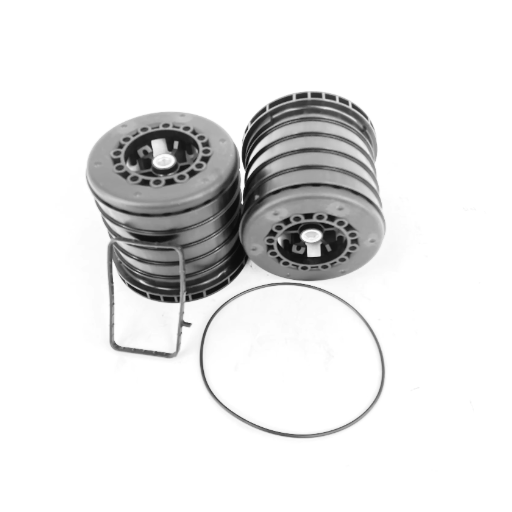
“Crankcase filter” sounds like one part, but it covers two system types, and they are not interchangeable.
| System | Where the gas goes | What the element must do |
|---|---|---|
| Open crankcase ventilation (OCV) | Vented to atmosphere after filtration | Strip enough oil mist that the engine bay stays clean |
| Closed crankcase ventilation (CCV) | Routed back to the turbocharger inlet and burned | Higher separation, so the turbo and aftercooler stay clean |
In an open system, the blow-by gas is filtered and then vented to atmosphere. The element’s job is to keep the vented stream clean enough that oil mist does not coat the engine bay, the enclosure, or nearby equipment. Open systems are the older and simpler arrangement, and they remain common on engines where routing gas back to the intake is not practical.
Because there is no downstream intake surface to protect, the separation requirement is less demanding. But the element still has to do its job, and it still loads up and needs replacement.
In a closed system, the filtered gas is returned to the intake and burned. That keeps the oil mist and the combustion by-products out of the atmosphere, and it is the arrangement used where emissions rules or enclosure conditions demand it.
The element carries a heavier burden here. Anything the element misses goes straight into the turbocharger and the aftercooler, where it fouls surfaces and cuts cooling. This is the difference Priya’s generator set ran into: the element had to match the closed system’s higher separation, not just the housing.
Which system an engine has is decided by the build and the emissions configuration, not by preference. The housing itself usually shows the answer: a closed system routes the outlet back toward the intake, and an open system vents to atmosphere. If you are not certain, the engine serial record is the authority.
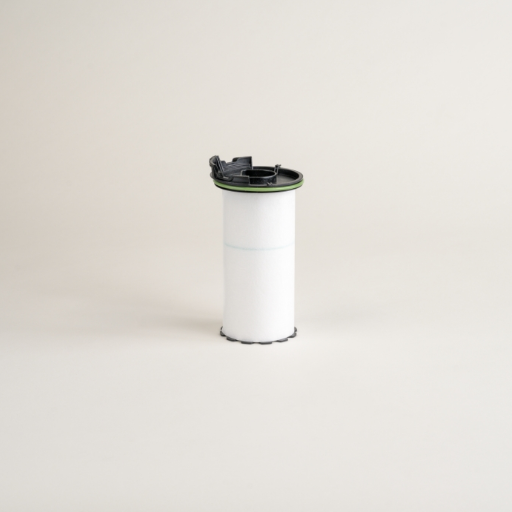
The right answer comes from three records, in this order.
The first question is open or closed, because it changes what the element has to achieve. Look at where the ventilation outlet goes. Then check the engine build record, because the same engine family can be fitted either way depending on the application and emissions stage.
The removed element is the most reliable record. Read the complete number, including any suffix, and note where it came from.
Do not stop at the brand name. A “Cummins crankcase filter” is a part reference, not a machine type, and one role carries several numbers. The complete number is what distinguishes one element from another.
Some crankcase ventilation systems use a serviceable element inside a separate housing, and the two are ordered as different parts. Confirm which one your service event actually replaces. The element in your hand is evidence; the listing is a document.
Scope note: Engine-service filtration for Cummins- and Perkins-powered equipment. Cummins and Perkins are applications and original reference names only. Confirm the engine build, complete part number, and installed position before ordering.
If you already have the number and want it checked against a build, the filter lookup explains what to send. Questions about the Cummins-side range route to Cummins crankcase filters, and Perkins-duty questions route to Perkins crankcase breather filters.

This is the naming trap that causes most crankcase-element misfits.
“Cummins crankcase filter” names a crankcase ventilation element carrying a Cummins or Fleetguard reference. “Perkins crankcase breather filter” names the same role, carrying a Perkins reference. They are two vocabularies for one component, not two different parts. The brand names the element, not the machine, and it does not tell you which system or which generation you have.
What does a crankcase filter do on a diesel engine?
It separates oil mist from the blow-by gas that leaks past the piston rings, so only clean gas leaves the crankcase. In a closed system, that gas returns to the intake; in an open system, it vents to the atmosphere. The element also lets the recovered oil drain back to the sump.
Is a crankcase filter the same as a crankcase breather filter?
Yes. They are the same component. “Crankcase filter” and “crankcase ventilation filter” are the Cummins and Fleetguard vocabulary, and “crankcase breather filter” is the Perkins vocabulary. The role is identical.
What is the difference between open and closed crankcase ventilation?
In an open system, filtered gas vents to the atmosphere. In a closed system, filtered gas returns to the turbocharger inlet and is burned. The closed system needs a higher-separation element so oil mist does not foul the turbocharger and aftercooler.
How do I know if my crankcase filter needs replacing?
Watch for oil in the intake or the aftercooler, rising oil consumption, oil leaks around seals, or smoke. A restricted element raises crankcase pressure, so a seal leak is often the first visible sign. Replace on the manufacturer’s schedule for the build.
What is the difference between a crankcase filter and an air filter?
They protect different things. An air filter cleans the intake air before it enters the engine. A crankcase filter cleans blow-by gas leaving the crankcase. They are different elements on different systems.
Do all diesel engines have a crankcase filter?
No. Some engines run a simple open breather with no serviceable element, and the arrangement depends on the build and the emissions configuration. Confirm what your engine actually carries before ordering.
Need help confirming a filter? Send the engine build, complete part number and quantity for review.
Request a Filter Quote