Request a quote
Get a Quote for Engine Filters
Email and phone are required. Leave anything you don't know blank.

Published
The fuel filter vs. water separator question starts with a simple fact: a fuel filter traps solid particles, and a water separator removes water. Many diesel engines combine both jobs in a single element, so the two names can point at the same part, or at two different parts, depending on the build.
Here is why the difference matters. Priya plans scheduled service for a small fleet of standby generator sets and two construction machines. She ordered a fuel element for a Cummins-powered set and fitted it where the previous element had come from.
The machine ran, then started passing water through to the injectors. The element she had removed was a water separator with a drain. The part she fitted was a plain fuel filter. The names matched the parts list, but the hardware did not.
This guide explains what a fuel filter does, what a water separator does, and how to tell which one you are holding before you order. It is written for engine-service filtration on generator sets, plant, marine, and fleet duty, where Cummins and Perkins are application and reference names only.
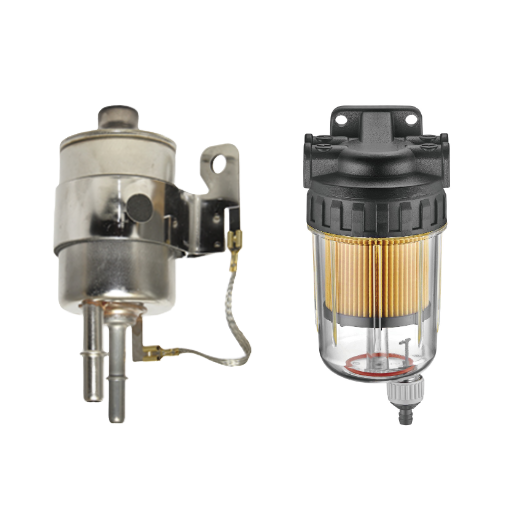
The two components protect against different contaminants. They are complements, not substitutes, and on many engines the same cartridge does both jobs.
A fuel filter uses pleated media to trap dirt, rust, and debris before they reach the injectors and the high-pressure pump. The damage it prevents is abrasive wear on precision components.
A plain fuel element is not built to remove significant water. It may absorb a little, but it cannot separate water and hold it. That is the limit that confuses, and it is the reason a water separator exists as a separate idea.
A water separator removes free water from the fuel. It uses coalescing or barrier media to shed water, then collects it in a bowl or sump until the operator drains it.
Water matters more than most buyers expect. Water reaching the high-pressure side causes injector and pump damage, and it feeds microbial growth that blocks elements. Technical material on fuel water separators explains the separation mechanism and why the separator is normally fitted upstream of the main filter.
The two jobs are different. A filter that traps particles is not doing the water-removal job, and a separator that strips water is not doing the fine-particle job. On a combined element, one cartridge is expected to do both.
The difference is easiest to hold onto as a table. It is also the part most likely to be pulled into a search snippet, so it is written to stand on its own.
| Attribute | Fuel filter | Water separator |
|---|---|---|
| Main job | Remove solid particles | Remove water |
| Contaminant it targets | Dirt, rust, debris | Free water and moisture |
| Media action | Pleated media traps solids | Coalescing or barrier media sheds and collects water |
| Observable hardware | Plain cartridge, no drain | Drain valve, clear bowl, or water-in-fuel sensor |
| Common prefix | FF (fuel filter) | FS (fuel/water separator) |
| On many diesels | Combined into one element with the separator | Combined into one element with the filter |
The “coarser then finer” split is documented by the filter makers. Donaldson’s material on what fuel-system filters do describes the upstream separator stage working at a coarser rating than the final filter stage. Where you need a specific micron or efficiency figure, confirm it against the manufacturer’s specification for your build rather than taking a number from a listing.
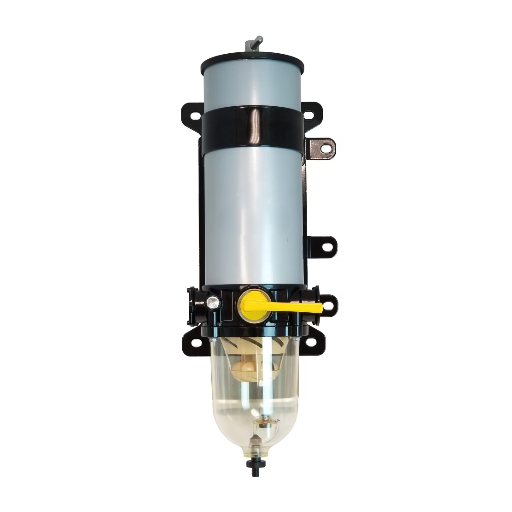
This is the point most guides skip, and it is the point that decides what you order. On some engines, the water separation and the particle filtration are one combined cartridge. On others, they are two separate elements. The same model designation can differ across production years.
A category name such as “fuel filter” or “water separator” is therefore a category, not a confirmation. The number printed on the removed element is what tells you which arrangement your engine runs.
Fleetguard and Cummins use a prefix convention worth knowing. FS usually marks a fuel/water separator, which handles water and coarse solids. FF usually marks a fuel filter, which handles fine solids at the final stage.
Treat the prefix as a clue, not a verdict. The suffix and the complete number matter as much as the first two letters, and the convention must be confirmed on your specific number. A prefix gets you to a candidate; it does not confirm the element.
The reliable check is this: read the complete number off the removed element, note the installed position, and match both against the engine parts record.
Tomás found this the hard way on a marine engine. A Cummins QSM11 build carried both an on-engine paper fuel element and a separate spin-on fuel/water separator. The two sat on the same engine. “Which one is the fuel filter?” had two correct answers, and the only way to order the right one was the number and the position, not the word on the box.
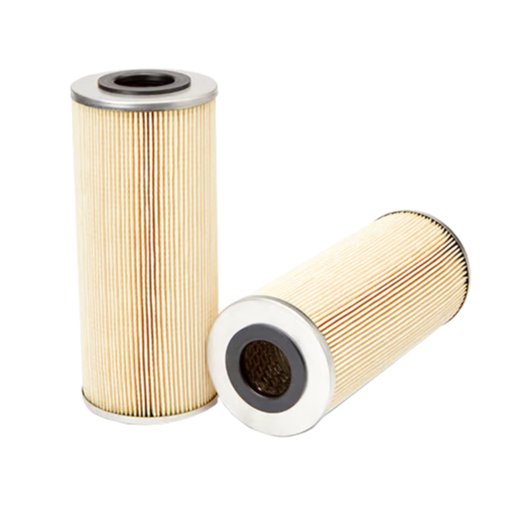
You can usually answer the question from the element itself, before you touch any documentation. Work through these five checks in order.
These checks take a minute on the machine. They are also the difference between ordering the right element and ordering a name.
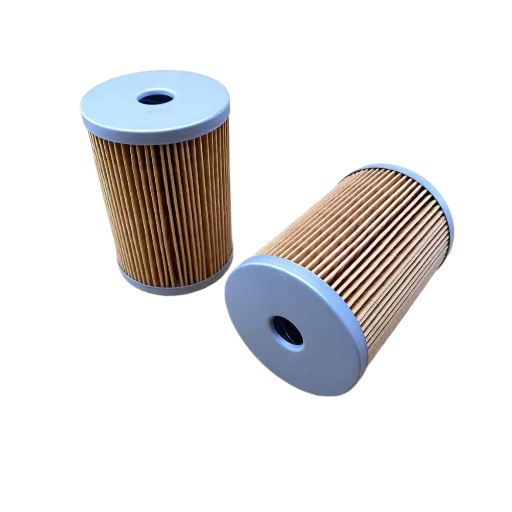
On Cummins and Perkins engines, the arrangement is build-specific, not model-specific. One build of a family can run a combined element while another runs a split arrangement, and the change can happen across production years without changing the model designation.
That is why the article does not list a specific part number as “the” answer for a given engine family. A number is a lead to check against the parts record, not a fitment claim. The engine family frames the question; the serial number and the removed element answer it.
Water-contamination questions route to the Cummins fuel water separators category. Plain fuel-element questions route to Cummins fuel filters. If the question is about where each stage sits in the fuel path rather than what job it does, that is the sibling guide on primary vs secondary fuel filter.
Is a fuel filter the same as a fuel water separator?
No. A fuel filter traps solid particles, and a water separator removes water. Many diesels combine both jobs in one element, so the names often point to the same part, but a plain fuel filter does not separate water.
Do I need both a fuel filter and a water separator?
It depends on the build. Some engines run a combined element; others split the jobs across two elements. Confirm the job number or the removed element rather than buying both by default.
How do I know if my fuel filter has a water separator?
Look for a drain valve, a clear bowl or sump, or a water-in-fuel sensor on the housing. An FS prefix on the part number is another clue.
What happens if water gets past the separator?
Water reaches the high-pressure side and causes corrosion and injector and pump damage. It also feeds microbial growth that can block the element.
Why does my engine have a fuel filter that the parts record does not list?
An upstream separator may be supplied by the chassis builder or generator packager, so the engine record can look complete and still miss a number.
Need help confirming a filter? Send the engine build, complete part number and quantity for review.
Request a Filter Quote