Request a quote
Get a Quote for Engine Filters
Email and phone are required. Leave anything you don't know blank.

Published
There is no single diesel fuel filter replacement interval. The correct interval depends on the engine build, the filter position, the duty cycle, and the fuel quality, and it is read from the engine manufacturer’s maintenance schedule for your build, not from a generic chart.
That claim matters because the search results, the forums, and the shop floor all hand you a number, and the numbers rarely agree. One source says 10,000 km. Another says 500 hours. A third says 75,000 miles. Each one is true for a specific build and duty, and none of them tells you which one applies to the machine in front of you.
This guide explains what actually determines a diesel fuel filter replacement interval, how to read the three ways an interval is expressed, and how to find the one that is correct for your build. It is written for engine-service filtration on generator sets, plant, marine, agricultural, and fleet duty, where Cummins and Perkins engines do the work.
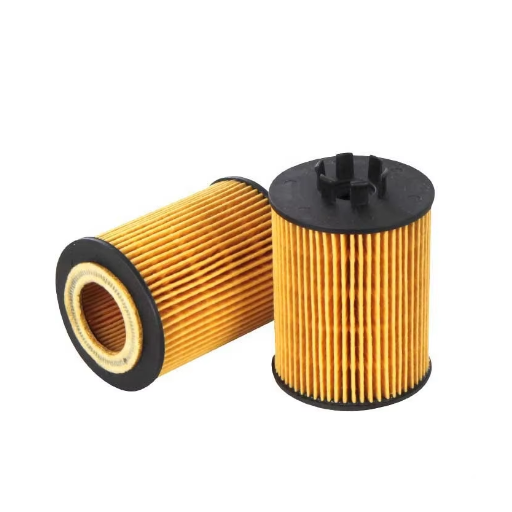
The reason the numbers conflict is that a fuel filter interval is not a property of “a diesel fuel filter.” It is a property of the engine it is fitted to, and of the way that engine runs.
The same query returns 10,000 km, 60,000 km, 250 hours, 500 hours, 15,000 miles and 75,000 miles, and every one of them is true somewhere. A light-duty pickup changed on a mileage schedule, a transit bus running a primary and a final stage, and a standby generator that starts twice a year are three different machines. They carry different filters, run different duty cycles, and are scheduled on different bases. There’s no reason their intervals should agree.
The error that costs money is treating a number as universal. Apply a “every 10,000 miles” rule to an hour-metered generator set, and you’re scheduling on a unit the machine doesn’t measure. Apply one interval to both fuel stages, and you are over-serving one position while neglecting the other. The number was never the problem. The problem is using a number without knowing which build and which basis it was written for.
The through-line of this whole article is one sentence. The interval is read from the engine’s maintenance schedule for a specific build; a generic chart can’t answer the question for the machine in front of you.
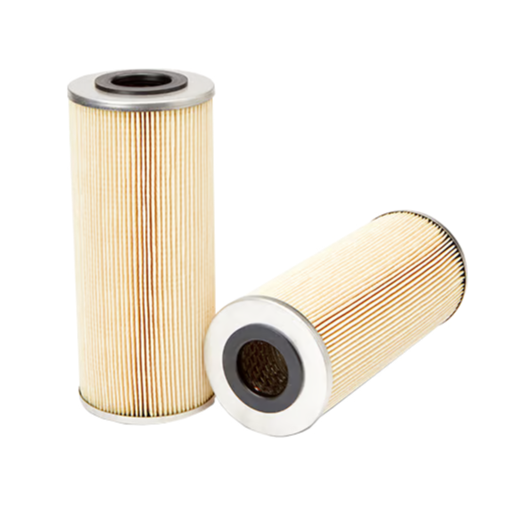
The same filter can have a different interval depending on how the engine’s usage is measured. Pickup and highway content runs on miles. Most industrial engines never see a useful odometer reading, because they run on operating hours or on the calendar.
| Basis | How it is measured | Typical equipment | The rule |
|---|---|---|---|
| Hours | Engine operating-hours meter | Generators, plant, marine, agricultural, off-road | The primary basis for industrial engines |
| Miles | Odometer | Highway trucks, pickups | Used where distance tracks load |
| Calendar | Months since last change | Standby generators, seasonal equipment, low-hour machines | Applies when the engine runs rarely; fuel degrades even when it does not run |
The most practical fact in the table is the “whichever comes first” rule. Where a schedule lists more than one basis, for example “500 hours or 6 months”, the earlier trigger wins. A planner building a schedule writes both into the system and lets the first one reached pull the work order.
A heavy-truck preventive-maintenance guide from FleetRabbit shows the pattern in practice: highway applications are commonly scheduled on distance, while off-road, agricultural and construction equipment are scheduled on engine hours. The unit follows the load.
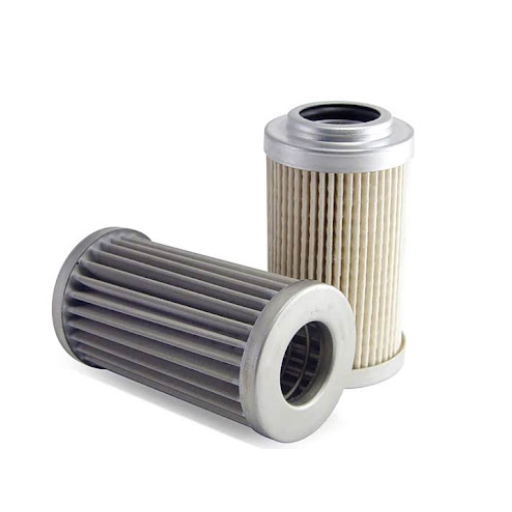
This is the single clearest proof that a blanket number is wrong. The two fuel stages are separately scheduled because they do different jobs and see different fuel. If you’d like the position distinction in full, the primary vs secondary fuel filter guide covers it; here the point is the timing.
The primary stage sees dirtier fuel. It removes water and bulk contamination, so on many builds it is changed more often than the final stage. The final stage protects the injection system and can carry a longer interval. Two positions, two jobs, two schedules.
A Cummins schedule for an ISL9 transit-bus application lists the primary fuel filter at 500 hours or 6 months, and the secondary at 1,000 hours or 12 months. The specific numbers are an example of how the schedule reads, sourced from Cummins maintenance documentation and to be confirmed against the full document for your build. The point is not the two numbers. The point is that the two positions are listed separately, and a mechanic who changes “the fuel filters” as one unit on one interval is wrong on both counts.
Jonas, a workshop technician, learned this the expensive way. He serviced a common-rail generator set by changing both fuel elements together at 500 hours. The primary stage was correct at that mark. The final stage still had half its life left, and the set owner was paying to throw away a fine element early while the coarser primary took all the load. The schedule did not say “change both at 500.” It said two different things for two different positions.
The correct approach is an interval per position, read from the schedule for your build. If your engine carries a primary and a final stage, confirm the Cummins fuel filters category for how the stages are arranged on your family.
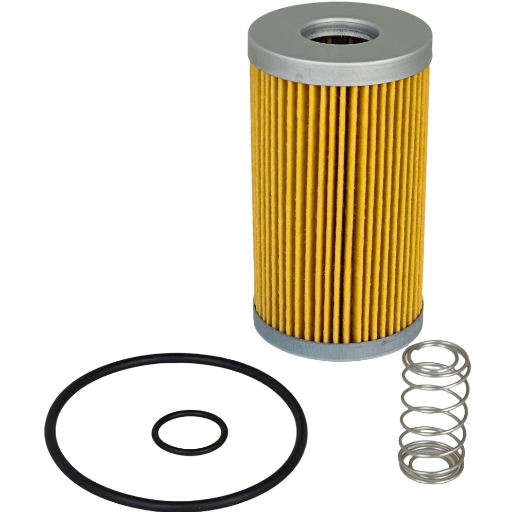
Every schedule interval assumes a certain fuel quality and a certain duty. When the real world is worse, the change comes earlier. Each factor below pulls the book value earlier; it does not replace it with a new number.
Water in fuel and microbial contamination. Stored diesel degrades and grows bacteria and fungi- the “diesel bug”- that plug filters fast. This is the dominant problem for standby generators and seasonal equipment that sit for months. The checks: drain the fuel/water separator, test stored fuel for water and microbial growth, and keep tanks full to limit condensation. HELLA’s diesel fuel maintenance guidance describes water removal as the standing task on a diesel fuel system.
Poor or variable fuel quality. One bad fill can plug a filter early, well before the scheduled interval. The checks: watch the water-in-fuel lamp and the service lamp, and note power loss or hard starting.
Biodiesel and higher contamination load. Blends above B20 or a consistently dirty supply shorten the filter’s useful life and pull the change earlier.
Duty cycle. Standby, prime, and severe duty change the basis. A standby set may run 20 hours in a year and still need an annual filter change, because the fuel degrades whether or not the engine runs. A severe-dust plant engine, by contrast, reaches its hour threshold quickly.
The rule that ties it together: the schedule gives the book interval; fuel quality and duty tell you whether to shorten it. Shortening it early is always cheaper than a clogged filter taking the engine down.
For the element that handles the water side, the Cummins fuel water separators category covers the separator and its drain schedule.
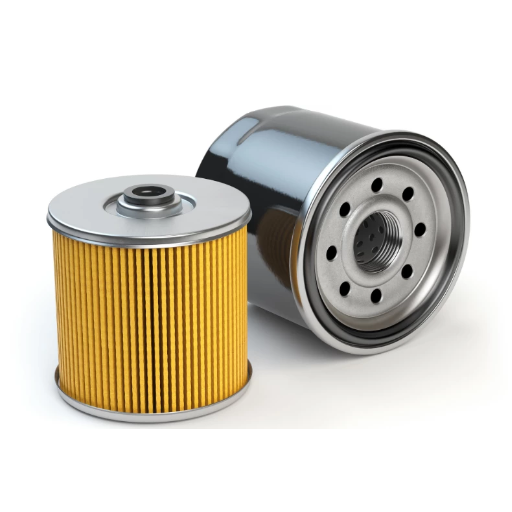
Work through these six records in order. They turn “what interval?” into a number you can defend.
Where two sources give two different numbers, the disagreement usually means they describe different builds or different positions. The build record and the installed position are what resolve it.
Intervals are build-specific, not model-specific. The same model designation can carry different filter arrangements and different schedules across production years and applications, so the engine model alone never settles the interval.
Cummins publishes maintenance schedules per engine family and build through QuickServe, and Cummins’ truck maintenance documentation shows how a schedule is expressed for a specific application. As one example of how wide the spread can be, a Cummins X15 long-haul application may list an extended-life fuel element rated up to 75,000 miles, while a generator or industrial application of a comparable family runs on hundreds of hours. Perkins publishes its service schedules in the engine manuals, indexed the same way.
The discipline is the same on both families. Common-rail QSB/QSL builds, and Perkins 1100/1200/2000 series engines carry a schedule per build and per position. Do not guess the interval from the model badge. Read it from the schedule for the serial or build number in front of you.
This article teaches how to find the interval. When you are ready to assemble the parts for a scheduled service event, the Cummins filter kits category is where a build-specific service set comes together.
How often should a diesel fuel filter be changed?
There is no single interval. It depends on the engine build, the filter position, the duty cycle, and the fuel quality, and it is read from the engine manufacturer’s maintenance schedule for your build, in hours, miles or calendar time, whichever comes first.
Should I change fuel filters by hours or miles?
Use whichever basis your engine’s schedule specifies, and whichever comes first. Industrial, generator, plant, and marine engines usually run on operating hours; highway vehicles run on miles.
How often should I change the fuel filter on a standby generator?
Annually, even if the hour threshold is not reached, because stored fuel degrades and develops microbial contamination. Drain the water separator regularly and test stored fuel for water and microbial growth.
Do the primary and secondary fuel filters have the same interval?
Not always. Some schedules list the primary, separator stage more often than the final stage. Confirm each position separately against the schedule for your build.
What happens if I leave a diesel fuel filter too long?
The element restricts fuel flow, causing power loss and hard starting, and eventually injector or high-pressure-pump damage and an engine shutdown.
Need help confirming a filter? Send the engine build, complete part number and quantity for review.
Request a Filter Quote